


Our Montessori Toddler Environment
The Montessori Toddler Environment is a carefully prepared space designed for the young child – a place where movement, independence, exploration, language and connection come together naturally.
For the toddler, it is not simply a classroom. It is a place to do, discover, repeat, practise, and gradually become independent. Every element is chosen and arranged at the child’s height, allowing her to participate meaningfully in the life of the community.
The toddler is respected as a capable individual while being recognised as undergoing extraordinary growth in coordination, language, concentration, social awareness, and sense of self. Our work is to provide the right conditions for this development to unfold.
Psycho-Sensory-Motor Development
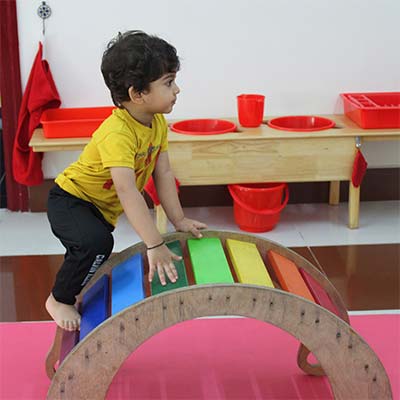
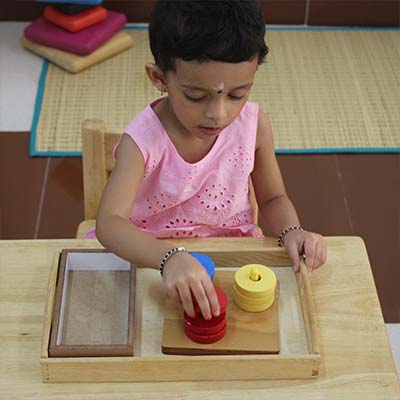
Psycho-sensory-motor development at the toddler stage refers to the integrated development of the mind, senses, and movement. The child learns by seeing, touching, listening, moving and acting upon the environment. The prepared environment offers rich sensory experiences and meaningful opportunities for movement, allowing the whole child to develop naturally and harmoniously.
Practical Life – Learning Through Everyday Living
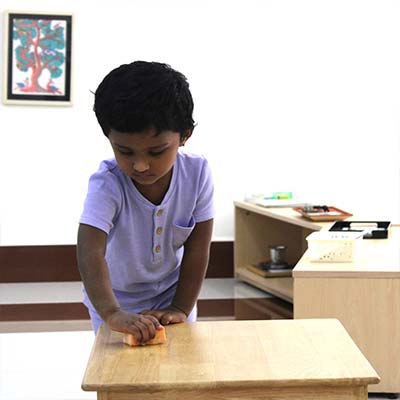
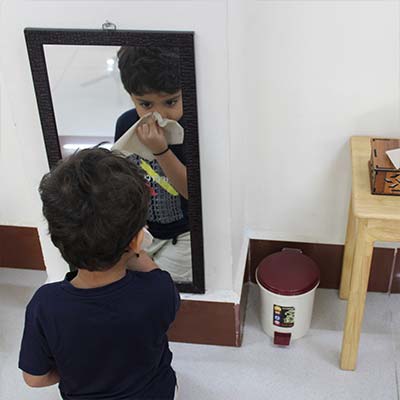
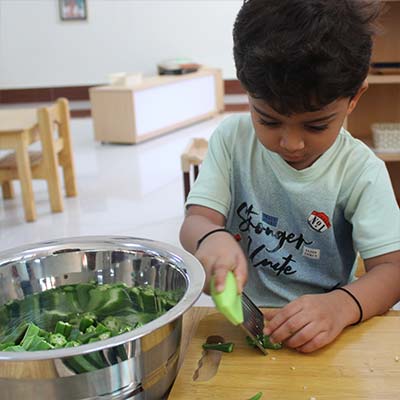
Practical Life is the foundation of the Toddler Community and the primary vehicle for psycho-sensory-motor development. It channels the toddler's intrinsic drive to participate in the real work of daily life and encompasses care of self which builds dignity and functional independence, care of the indoor and outdoor environment which fosters responsibility and belonging, purposeful movement of objects which meets the need for large, meaningful effort and refines coordination and spatial awareness, and food preparation which unites self-care and care for others through the full cycle of preparing, sharing and cleaning up.
Language - Building the World Through Words
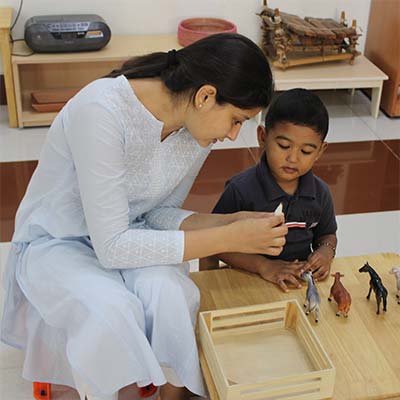
The toddler is in a sensitive period for language. Rich opportunities are offered for listening, speaking, naming, singing, storytelling, and connecting words with real experiences. Communication is clear and respectful, precise vocabulary is introduced, and sufficient time is given to listen, process, and respond. Objects and experiences become meaningful language and learning not just the names of things, but how to communicate needs, express feelings, listen to others and participate in conversation. Stories, songs, books and rhymes are woven naturally into the day.
Art and Music
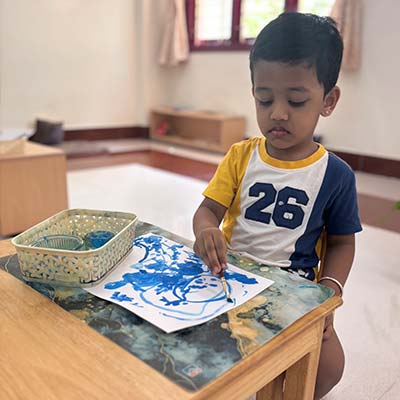
In the toddler environment, art and music are opportunities for exploration, not performance. Children paint, draw, work with clay and explore colour for the joy of making and expressing, rather than an adult-directed product. Songs, rhymes, rhythm instruments and movement invite the child to listen, participate and express, supporting language, coordination, memory, social connection and joy through both structured and spontaneous experiences.